

In today’s competitive business environment, attracting customers is only the beginning. The real challenge is building meaningful relationships that encourage customers to interact with your brand, trust your offerings and continue doing business with you.
This is where customer engagement becomes important.
From responding to customer enquiries and sending personalised messages to managing sales conversations and improving customer experiences, every interaction contributes to the relationship between a business and its customers.
Modern businesses are increasingly using artificial intelligence (AI), automation and customer data to make these interactions more relevant, timely and effective.
In this guide, we will explore what customer engagement is, why it matters, its different types, key strategies, benefits and how AI-powered platforms are transforming the way businesses connect with customers.
What is Customer Engagement?
Customer engagement is the ongoing process of interacting with customers through different communication channels to build relationships, improve experiences, increase trust and encourage long-term loyalty.
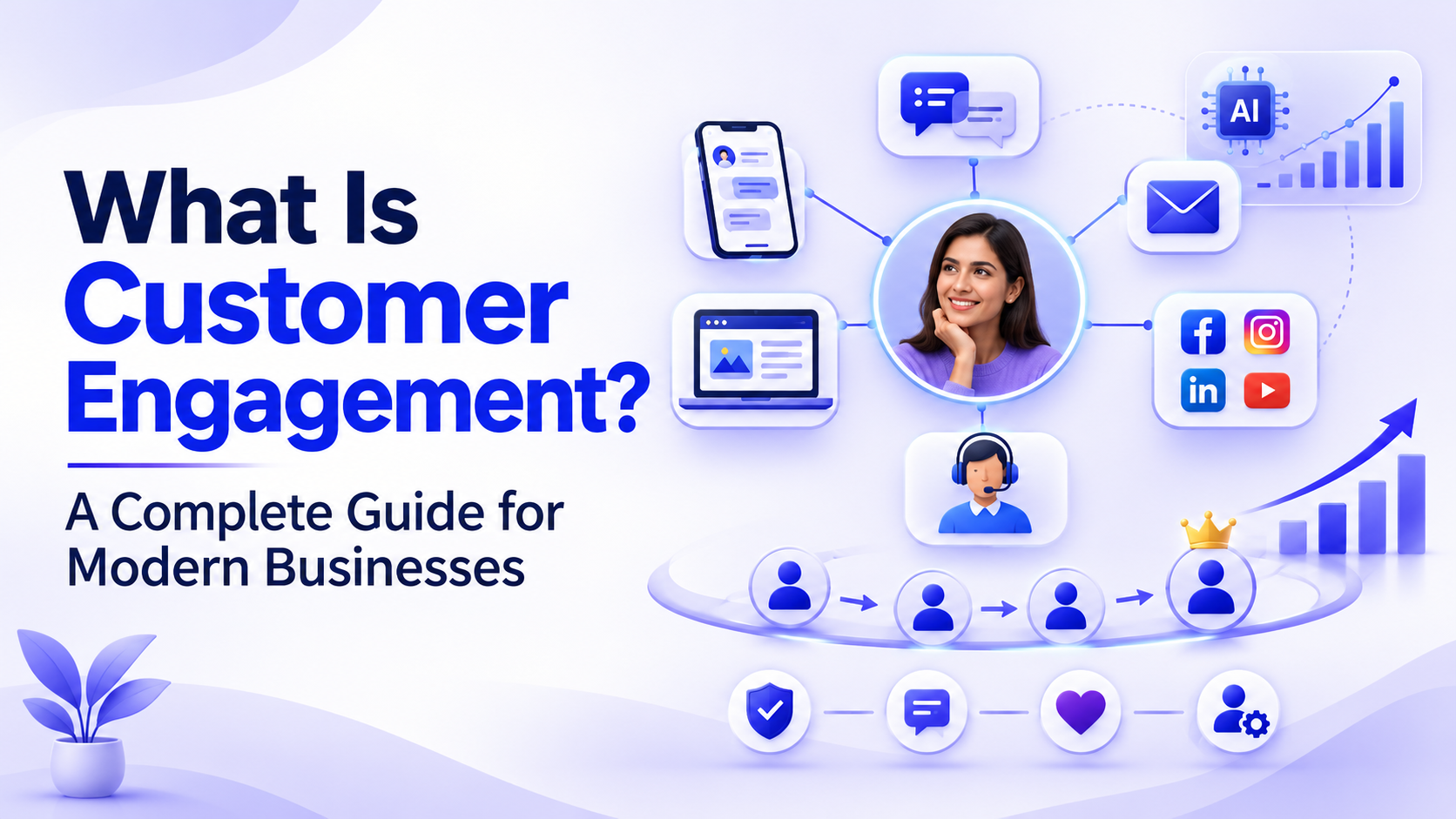
It includes every meaningful interaction a customer has with a business, whether through a website, email, phone call, social media, WhatsApp, SMS or customer support.
For example, when a potential customer visits your website, submits an enquiry, receives a follow-up message and speaks with your sales team, each interaction contributes to customer engagement.
Effective customer engagement goes beyond simply communicating with customers. It focuses on understanding their needs, providing relevant information and delivering a consistent experience throughout their journey.
In simple terms, customer engagement is about creating meaningful interactions that turn potential buyers into satisfied and loyal customers.
Why Is Customer Engagement Important for Modern Businesses?
Customers today expect businesses to understand their requirements and provide quick, relevant responses. Businesses that fail to maintain consistent communication may lose potential opportunities to competitors.
A well-planned customer engagement strategy helps businesses maintain stronger relationships and improve their overall sales performance.
Here are some important reasons why customer engagement matters.
1. Builds Customer Trust
Regular and meaningful communication helps customers feel more confident about a brand. Providing accurate information, responding to enquiries and maintaining transparency can strengthen customer relationships.
2. Improves Customer Retention
Engaged customers are more likely to return when they receive consistent support and personalised experiences. Maintaining communication after a purchase also helps businesses develop long-term relationships.
3. Increases Sales Opportunities
Following up with potential customers at the right time can prevent valuable enquiries from being overlooked. Businesses can use customer interactions to identify buying interests and guide prospects towards a purchase.
4. Creates Personalised Customer Experiences
Understanding customer preferences, previous interactions and requirements allows businesses to deliver more relevant communication rather than sending the same message to everyone.
5. Improves Marketing Effectiveness
Customer engagement data helps marketing teams understand which campaigns generate responses, which communication channels perform better and where improvements are needed.
6. Supports Better Business Decisions
Customer feedback, enquiry patterns and engagement reports provide useful insights that help businesses improve their products, services and communication strategies.
What are the Different Types of Customer Engagement?
Customer engagement can happen through several channels and interactions. Businesses should select communication methods based on their audience, industry and customer preferences.
Some common types include:
1. Direct Engagement
Direct engagement involves one-to-one communication between a business and its customers.
Examples include:
- Sales calls and follow-up calls.
- Customer support conversations.
- Personalised emails.
- WhatsApp messages.
- Product demonstrations.
2. Digital Engagement
Digital engagement takes place through online platforms and digital communication channels.
Examples include:
- Website interactions.
- Social media engagement.
- Email marketing campaigns.
- Online enquiry forms.
- Mobile applications.
3. Social Media Engagement
Businesses interact with customers through social media platforms by responding to comments, answering questions, sharing updates and participating in conversations.
4. Transactional Engagement
These interactions are related to customer purchases and transactions.
Examples include order confirmations, payment notifications, service updates, delivery information and renewal reminders.
5. Personalised Engagement
Personalised engagement uses customer information and preferences to deliver relevant communication.
For example, a business may send product recommendations based on a customer’s previous enquiry or purchase history.
What is a Customer Engagement Platform?
A Customer Engagement Platform is a software solution that helps businesses manage, monitor and improve customer interactions across multiple communication channels.
Instead of handling customer conversations separately across different tools, businesses can use an integrated platform to organise customer information, manage enquiries and coordinate communication.
Depending on its capabilities, a customer engagement platform may include:
- Customer information management.
- Lead capture and enquiry tracking.
- WhatsApp and SMS communication.
- Voice and calling campaigns.
- Customer verification.
- Automated follow-ups.
- Campaign management.
- Engagement analytics and reporting.
For growing businesses, such platforms help create a more organised communication process and reduce the chances of missing important customer interactions.
An effective platform also helps sales and marketing teams understand where each customer stands in the buying journey.
How is AI Transforming Customer Engagement?
Artificial intelligence is changing how businesses identify potential customers, understand their requirements and manage communication.
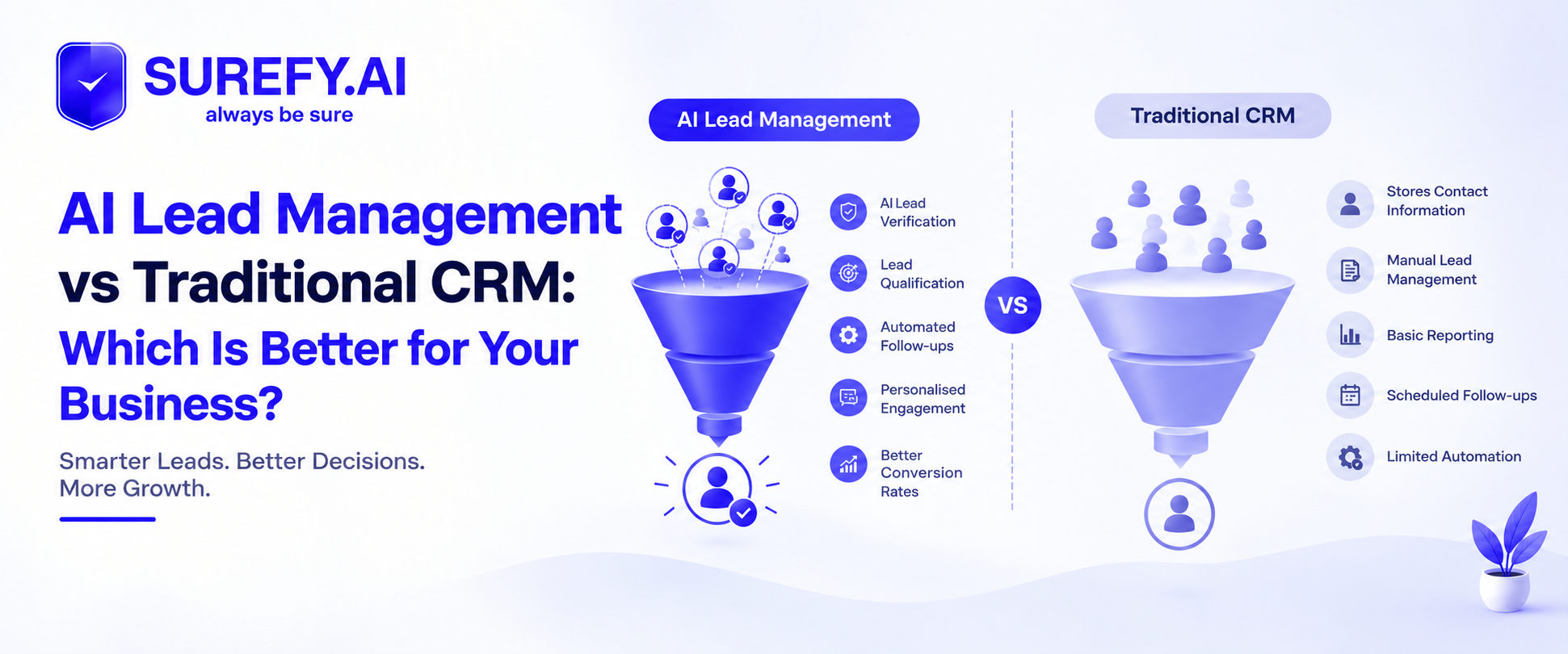
Traditional engagement processes often depend on manual data entry, repetitive follow-ups and separate communication tools. AI-powered solutions can help automate several of these activities.
Here are some important ways AI is improving customer engagement.
1. AI-Powered Lead Management
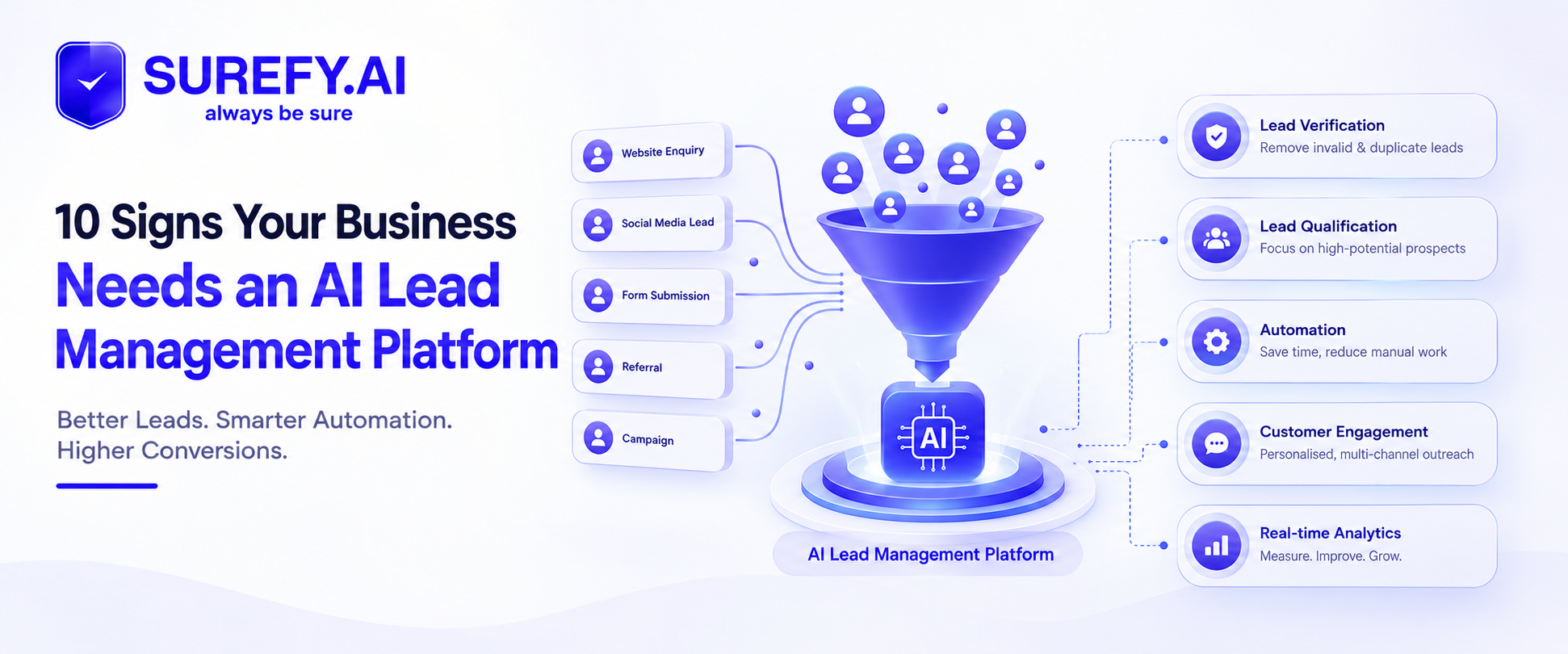
An AI Lead Management Platform helps businesses organise incoming enquiries, track customer interactions and manage leads throughout the sales process.
AI Lead Management Software can also support lead prioritisation, automated workflows and sales activity tracking, depending on the platform’s capabilities.
2. AI Lead Verification
Not every enquiry represents a genuine business opportunity. Some leads may contain incorrect contact details, incomplete information or unreliable customer data.
AI Lead Verification helps businesses assess lead information and identify potential data-quality issues.
Using Lead Verification Software and an AI Lead Verification Platform can help businesses improve their lead management processes and reduce the time spent handling unsuitable enquiries.
3. Verified Lead Generation
Generating a large number of enquiries does not always result in better sales.
Businesses should focus on Verified Lead Generation, where the objective is to improve the reliability and usability of lead information.
A Verified Lead Generation Platform can combine lead capture, verification and qualification processes to help sales teams work with better-organised customer information.
4. Customer Data Validation
Accurate customer information is essential for effective communication.
Customer Data Validation helps businesses identify missing, inconsistent or potentially incorrect information before using it in sales and marketing activities.
A Customer Data Verification Platform can support more reliable customer records and help reduce communication errors.
5. Automated Sales Communication
AI Sales Automation helps businesses streamline repetitive sales activities such as follow-up reminders, lead assignment and communication workflows.
This allows sales representatives to spend more time on meaningful customer conversations rather than routine administrative tasks.
6. Personalised Marketing Campaigns
An AI Marketing Platform and Marketing Automation Platform can help businesses organise customer segments, schedule campaigns and deliver relevant messages based on customer behaviour and preferences.
Campaign Management Software further helps marketing teams plan, execute and monitor their communication activities.
Together, these technologies can create a more consistent and organised customer engagement process.
What is the Role of Customer Verification in Customer Engagement?
Customer verification is an important part of building reliable business relationships.
Before engaging with a potential customer, businesses need accurate and usable information to ensure that communication reaches the intended person or organisation.
A Customer Verification Platform can help businesses manage verification-related processes using suitable digital tools and integrations.
For example:
- Digital Customer Verification: Helps businesses verify customer information through digital processes.
- Business Verification API: Allows businesses to integrate supported business verification services into their existing applications and workflows.
- Customer Data Validation: Helps identify incomplete or inconsistent customer records.
- AI Lead Verification: Supports the assessment of lead information and data quality.
These processes are particularly useful for businesses handling large enquiry volumes, digital onboarding, financial services, sales operations and customer acquisition.
However, verification results depend on the data sources, checks and integrations available through the chosen solution.
Customer Engagement vs Customer Experience: What Is the Difference?
Customer engagement and customer experience are closely related, but they are not the same.
Customer engagement focuses on interactions between a business and its customers, while customer experience refers to the customer’s overall perception of the brand across the entire relationship.
| Comparison | Customer Engagement | Customer Experience |
|---|---|---|
| Meaning | Interactions between a business and customers | Overall impression of a brand |
| Focus | Communication and relationship building | Complete customer journey |
| Objective | Encourage meaningful interactions | Improve customer satisfaction |
| Examples | Calls, emails, messages and campaigns | Website usability, product quality and support |
| Measurement | Response rates, interactions and conversions | Satisfaction, feedback and retention |
In simple terms, customer engagement is one of the important factors that shapes the overall customer experience.
Businesses need both to build stronger customer relationships.
Best Customer Engagement Strategies for Businesses
A successful customer engagement strategy requires more than sending frequent messages. It involves understanding customer expectations and communicating with them at the right time.
Here are some practical strategies businesses can implement.
1. Understand Your Target Audience
Identify your customers’ interests, requirements, challenges and preferred communication channels.
Understanding your audience helps businesses create relevant communication instead of relying on generic marketing messages.
2. Respond to Enquiries Quickly
Delayed responses can result in missed sales opportunities.
Create a structured process for capturing enquiries, assigning leads and following up with potential customers.
3. Use Multiple Communication Channels
Customers may prefer different communication methods.
Consider using:
- WhatsApp Business.
- Email marketing.
- SMS campaigns.
- Voice calls.
- Website enquiry forms.
- Social media.
An integrated communication strategy helps businesses maintain consistent interactions.
4. Personalise Customer Communication
Use relevant customer information to make communication more meaningful.
Address customer requirements, share useful information and recommend suitable products or services based on their interests.
5. Automate Repetitive Activities
Use automation for routine tasks such as follow-up reminders, enquiry assignments, campaign scheduling and customer notifications.
This helps teams save time and maintain consistent communication.
6. Monitor Engagement Performance
Regularly review campaign results, customer responses, conversion rates and follow-up performance.
Use these insights to identify gaps and improve your engagement strategy.
7. Maintain Accurate Customer Data
Review customer records regularly to reduce duplicate, incomplete and incorrect information.
Better data quality supports more effective communication and marketing decisions.
How to Choose the Right Customer Engagement Platform?
Selecting the right platform depends on your business requirements, customer base and communication needs.
Before investing in a solution, consider the following factors:
- Multiple Communication Channels: Check whether the platform supports the channels your customers use.
- Lead Management: Look for features that help capture, organise and track enquiries.
- Verification Capabilities: Evaluate whether it supports suitable customer and lead verification processes.
- Automation: Check whether routine follow-ups and marketing workflows can be automated.
- Analytics and Reporting: Ensure you can monitor customer interactions and campaign performance.
- Integration Support: Check whether the platform connects with your existing business tools.
- Scalability: Choose a solution that can support your growing customer engagement requirements.
- Data Security: Review its security practices, access controls and applicable data protection requirements.
The right platform should make customer communication easier to manage while helping your business build stronger relationships.
How Surefy AI Helps Businesses Improve Customer Engagement
Managing customer enquiries, verifying lead information and maintaining consistent communication can become challenging as businesses grow.
Surefy AI helps businesses bring important customer engagement and lead management activities into a more organised process through AI-powered business solutions.
Its solutions focus on areas such as:
- AI Lead Management: Organise and manage customer enquiries more effectively.
- Lead Verification: Improve the quality and reliability of lead information.
- Customer Engagement: Support customer communication through digital engagement channels.
- WhatsApp Business API: Enable business communication through WhatsApp.
- Voice and SMS Campaigns: Support customer outreach and campaign communication.
- Analytics: Gain insights into business and campaign performance.
- AI Automation: Streamline suitable repetitive business processes.
By combining lead management, customer verification and communication capabilities, businesses can work towards a more structured customer acquisition and engagement process.
Whether you are a growing business, marketing team or enterprise, having the right technology can make customer interactions easier to manage and improve the way your organisation handles potential customers.
Explore Surefy AI to learn more about solutions for AI-powered lead management and customer engagement.
Future of Customer Engagement: What Businesses Should Expect
Customer engagement is moving towards more intelligent, personalised and data-driven communication.
As AI technology continues to develop, businesses are likely to place greater emphasis on:
- Predictive customer insights.
- AI-powered customer support.
- Automated lead qualification.
- Real-time communication.
- Personalised marketing campaigns.
- Improved customer data accuracy.
- Integrated customer engagement systems.
Businesses that adopt suitable technologies and focus on customer needs will be better positioned to build meaningful relationships and improve their sales and marketing processes.
Frequently Asked Questions (FAQs)
1. What is customer engagement in simple words?
Customer engagement refers to the interactions and communication between a business and its customers. It includes calls, emails, messages, social media interactions and other activities that help build customer relationships.
2. What is a Customer Engagement Platform?
A Customer Engagement Platform is a software solution that helps businesses manage customer communication, track interactions and improve relationships through different channels such as WhatsApp, SMS, email and voice.
3. Why is customer engagement important for businesses?
Customer engagement helps businesses build trust, improve customer retention, generate sales opportunities, understand customer needs and create better customer experiences.
4. How does AI improve customer engagement?
AI helps businesses analyse customer information, automate repetitive tasks, prioritise leads, personalise communication and improve customer interaction processes.
5. What are the best customer engagement channels?
Common customer engagement channels include WhatsApp, email, SMS, phone calls, websites, mobile applications and social media platforms. The right channels depend on customer preferences and business objectives.
6. What is the difference between customer engagement and lead management?
Customer engagement focuses on building relationships through meaningful interactions, whereas lead management involves capturing, organising, tracking and nurturing potential customers throughout the sales process.
7. What is AI Lead Verification?
AI Lead Verification uses artificial intelligence and supporting data checks to assess lead information, identify potential inconsistencies and help businesses improve lead data quality.
8. How can businesses improve customer engagement?
Businesses can improve customer engagement by responding quickly, personalising communication, maintaining accurate customer information, using multiple communication channels and automating suitable follow-up activities.
9. What features should a Customer Engagement Platform have?
Important features may include customer data management, lead tracking, communication channel integration, automated follow-ups, campaign management, verification capabilities and analytics.
10. Can customer engagement automation improve sales?
Yes. Automation can help businesses manage follow-ups, organise enquiries, deliver timely communication and reduce repetitive administrative work. This allows sales teams to focus more on qualified opportunities and meaningful conversations.
Final Thoughts
Customer engagement is no longer just about communicating with customers. It is about understanding their needs, providing relevant interactions and building relationships that support long-term business growth.
With the growing adoption of AI, automation and digital communication, businesses have more opportunities to improve how they manage customer interactions.
By combining accurate customer information, effective lead management and personalised communication, businesses can create a stronger foundation for customer engagement.
Ready to make every customer interaction more meaningful? Explore Surefy AI and discover smarter ways to manage leads, verify customer information and improve business communication.